
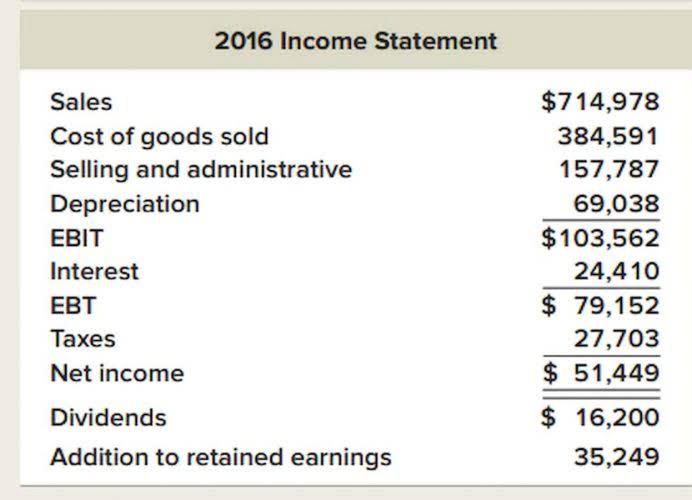
Closing entries are journal entries made at the end of accounting periods that involve transferring data from temporary accounting on the temporary accounts on the income statement to permanent accounts. At the end of a financial period, the ending balance from the revenue accounts and expense accounts are transferred to the income summary account. There are three broad steps that are involved in using and preparation of income summary account. As the first step, the revenue accounts have to be closed, wherein such balances would reflect credit balance at the end of the financial period.
Close and

The Income Summary is more than just a transitional account; it’s a strategic tool that provides clarity and insight into a company’s financial narrative. It’s the culmination of a period’s financial activities and a starting point for the next, ensuring continuity and coherence in financial reporting. The Income Summary is very temporary since it has a zero balance throughout the year until the year-end closing entries are made. Next, the balance resulting from the closing entries will be moved to Retained Earnings (if a corporation) or the owner’s capital account (if a sole proprietorship). This kind of financial report is essential for business owners, managers, and investors because it provides a clear snapshot of a company’s profitability for a specific period.
Income Summary: Final Thoughts
- If the company declares a dividend, it reduces the retained earnings on the balance sheet, which in turn impacts the income summary account.
- Since it is a temporary ledger account, it does not appear on any financial statement.
- It serves as a temporary account in the closing process, consolidating revenues and expenses from the income statement.
- This intermediary account summarizes the net income or net loss for that specific period.
- Once the revenues and expenses are transferred to the income summary account, the resulting net balance, whether a profit or a loss, is then moved to the retained earnings account.
For example, a consistent increase in net income reflected in the income summary might encourage a business owner to expand operations or explore new markets. Many believe that the Income Summary Account is a permanent fixture in the general ledger. However, it is a temporary account created at the beginning of the closing process and zeroed out once the process is complete. Online Accounting From an accountant’s perspective, the Income Summary is akin to a checkpoint in a marathon; it’s where one assesses performance before moving forward. For auditors, it’s a focal point for verifying the accuracy of recorded transactions. Investors and analysts view the Income Summary as a snapshot of the company’s financial health, indicative of management’s prowess in steering the organization towards profitability.
- Correcting this through the proper use of the Income Summary account helped them secure a vital loan.
- Once all the entries are passed, all the values in the revenue account would amount to zero.
- Investors scrutinize this summary to gauge the company’s profitability and potential for growth.
- By understanding the transition from closing to opening balances, stakeholders can better appreciate the continuity and change inherent in financial reporting.
- Rather than closing the revenue and expense accounts directly to Retained Earnings and possibly missing something by accident, we use an account called Income Summary to close these accounts.
- This account is only used during the closing process and does not appear in financial statements.
Credit Cloud

For auditors, it represents a checkpoint for compliance and internal controls. Meanwhile, business owners view the accuracy of this account as a reflection of the company’s financial health over a specific period. The income summary account is a temporary account used in the closing stage of the accounting cycle to collect the balances of the revenue and expense accounts, which are then closed.
To illustrate, consider a company that has had a particularly volatile fiscal year with numerous one-time gains and losses. The Income Summary allows the company to consolidate these events and assess their overall impact on the financial results. Once everything is in the account, businesses can easily determine if they made a profit or a loss. After this analysis, they move the total profit or loss into their main savings account, also called retained earnings, and the income summary account is emptied and ready to be used again next year. This serves as an excellent way for businesses to keep their financial records organized and start fresh each year.
- Sharp fluctuations can raise red flags, suggesting potential volatility in earnings, which could impact investment decisions.
- The total of all these credits is then offset by a single debit to the Income Summary account.
- We need to complete entries to update the balance in Retained Earnings so it reflects the balance on the Statement of Retained Earnings.
- It’s used for internal closing processes and does not directly correlate with taxable income.
- To add something to Retained Earnings, which is an equity account with a normal credit balance, we would credit the account.
Characteristics of Permanent Accounts:

At the end of the accounting period, all fees will be closed by transferring the debit to the income summary by crediting the expenses account and debiting the income summary account. An income summary is a temporary account in which all the revenue and expenses accounts‘ closing entries are netted at the accounting period’s end. Once the entries are finalized, the income summary closing entries are documented and transferred to the retained earnings of an organization or individual.
Reporting
It summarizes income and expenses arising from operating and non-operating activities. When doing closing entries, try to remember why you are doing them and connect them to the financial statements. To update the balance in Retained Earnings, we must transfer net income and dividends/distributions to the account. By closing revenue, expense and dividend/distribution accounts, we the income summary account is used to: get the desired balance in Retained Earnings. The Income Summary account determines the company’s profitability by aggregating revenues and expenses before the net result is transferred to permanent equity accounts. Once the net balance is calculated and transferred, the Income Summary account itself is immediately zeroed out.
After the net income or net loss is calculated, the balance in the Income Summary Account is transferred to the retained earnings account in the https://istecuador.com/2023/11/23/invoice-to-cash-a-guide-to-the-i2c-process-2/ balance sheet. The Income Summary Account is a temporary account used in accounting that summarizes the company’s revenues and expenses for a specific period of time. The allocation of dividends to relevant accounts ensures accurate financial reporting and decision-making.

They’d record declarations by debiting Dividends Payable and crediting Dividends. If this is the case, then this temporary dividends account needs to be closed at the end of the period to the capital account, Retained Earnings. This is closed by doing the opposite – debit the capital account (decreasing the capital balance) and credit Income Summary. The Income Summary Account is closed at the end of an accounting period, usually at the end of the year.